The Animal Kingdom

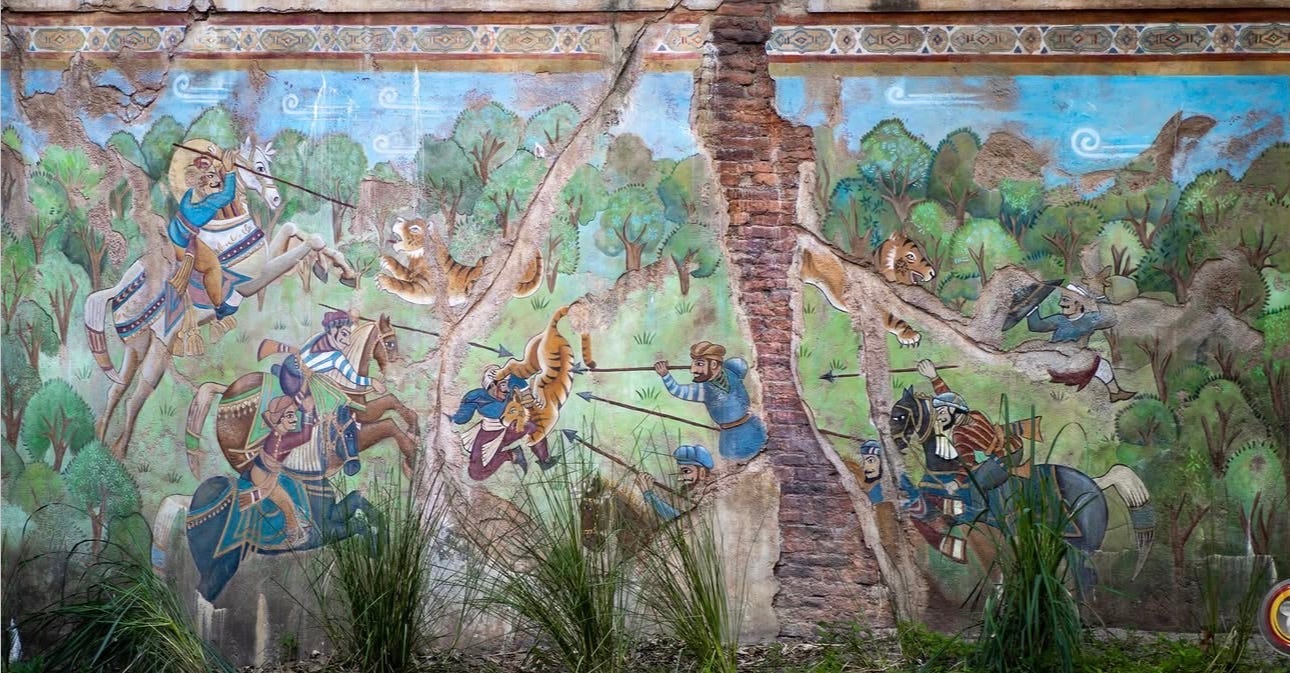
We tend to picture the animal kingdom as something we visit—a place out there, beyond the city limits, that we admire when we have the time and feel guilty about when we don't. But the truth is closer and less comfortable than that. We do not live beside the living world; we live inside it, and we depend on it in ways that are mostly invisible until they begin to fail. The abundance of other species is not a pleasant backdrop to human life. It is one of its load-bearing walls.
Start with the simplest possible measure: money. By the most widely cited estimate, more than half of global GDP—around $44 trillion of economic activity—is moderately or highly dependent on nature and the services it quietly provides, from healthy soils to clean water to a stable climate. A later analysis put the figure higher still, at roughly $58 trillion, or 55% of world GDP. These numbers are crude—nature's worth obviously cannot be captured on a balance sheet—but they make a useful point. Even by the narrow logic of the economy, the natural world is not an ornament. It is infrastructure.
Pollination is the clearest example, partly because it is so easy to overlook. Roughly three-quarters of the crop types we grow for food depend on animal pollinators to some degree, and the work of bees, flies, beetles, butterflies, and bats has been valued at more than $235 billion a year. Here, though, nuance matters, and it is worth getting right. Our staple calories—wheat, rice, maize—come largely from crops pollinated by wind or self-pollination, so a world without pollinators would not simply starve. What it would lose is something subtler and still serious: a meaningful share of yields, and with it much of the fruit, vegetable, and nut diversity that supplies the micronutrients human health actually depends on. The threat is less a sudden collapse than a slow narrowing of what the planet can feed us.
This points to the deeper principle, which is interdependence. Ecosystems are not collections of separate creatures sharing an address; they are webs of relationship in which each strand helps hold the others in place. Predators regulate the grazers that would otherwise strip a landscape bare. Insects break down waste and return nutrients to the soil. Forests and wetlands store carbon, filter water, and buffer floods. Crucially, these functions depend not just on a species being present but on its being abundant—on there being enough individuals, spread widely enough, to keep doing the work. A handful of survivors in a reserve cannot pollinate a continent or cycle the nutrients of a watershed. Abundance, not mere existence, is what keeps the system running.
And abundance is what we are losing. The most recent Living Planet Report records an average 73% decline in the size of monitored wildlife populations since 1970. That figure deserves to be read carefully rather than dramatically: it does not mean that 73% of all animals have vanished, but that the populations being tracked have, on average, shrunk by that proportion—a statistic that is frequently misinterpreted and that reflects steep historical losses as much as recent ones. Still, the direction is not in doubt. The most commonly reported driver is habitat loss and degradation, much of it from the way we farm, build, and extract—and the worry is not gradual decline alone but the prospect of crossing tipping points, thresholds beyond which an ecosystem reorganizes into something poorer and does not easily return.
This is, finally, why sustainability is not a slogan but a description of how the system works. A healthy ecosystem can absorb a great deal of pressure and recover; that resilience is one of nature's most valuable gifts to us. But it is finite. Push past what the web can regenerate—take more than is replaced, fragment more than can heal—and resilience gives way to fragility, and fragility, eventually, to breakdown. Sustainability simply means living within that regenerative capacity, drawing on the interest rather than spending down the principal.
The encouraging part is that the web is not only fragile; it is also responsive. The same monitoring that reveals decline also records recovery wherever we make room for it: protected habitats refill, reintroduced species re-establish themselves, populations once written off begin, slowly, to climb again. The animal kingdom, in other words, is not asking for our charity. It is asking for the far more practical recognition that its abundance and ours are the same project—that the web which holds the wren and the bee and the wolf is the one holding us as well, and that we cut its strands at a cost we are only beginning to learn how to count.
Excellent! Thank you for explaining all the ways we’re dependent on and part of nature.